Whole-Home Generator Installation in San Dimas: Sizing & Permit Guide for 91773
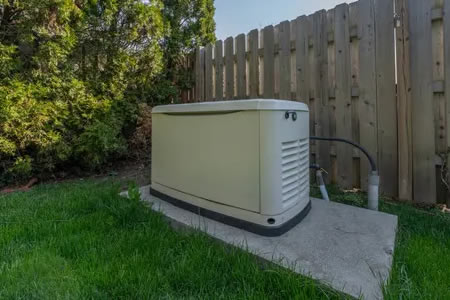
If you’re exploring generator installation in San Dimas, you want a system that keeps the AC, lights, and refrigerators running when the grid goes down. This guide from San Dimas Electric explains how to size a whole home standby generator for local heatwaves and PSPS events, what the San Dimas permitting steps look like, and how automatic transfer switch placement works near property lines. For a deeper look at equipment options and scheduling, see our whole-home generator service page.
Why Standby Power Matters During San Dimas Heat and PSPS
San Dimas summers can push your HVAC hard, especially during hot, dry wind events that raise wildfire risk. That is also when Public Safety Power Shutoffs are most likely. A properly sized standby system keeps the key loads going so your home stays safe, food stays cold, and medical devices stay powered.
Unlike portables, a permanently installed natural gas standby unit starts automatically and powers pre-selected circuits or your whole home. It runs quieter than most portables and can operate for long durations without refueling, which is critical when local stations are busy or roads are closed.
How to Size a Standby Generator for 91773 Homes
Right-sizing begins with the loads that truly matter in our climate. In San Dimas, that usually means central air, refrigeration, lights, outlets for charging, internet equipment, and a furnace blower for winter nights. The goal is to add running watts, then account for starting surges from motors and compressors.
Size for starting current, not only running watts. Air conditioners and refrigerators draw extra power when compressors start. That momentary surge often drives the generator choice and whether you’ll need a soft‑start kit or load‑shedding modules.
Critical Loads Most Homeowners Choose
- Central AC or heat pump: running draw varies by tonnage and efficiency; start surge is higher and may require soft‑start or load management
- Refrigerator and garage fridge or freezer: steady draw with moderate start surge
- Furnace blower and thermostat controls
- Lighting circuits in main living areas and bedrooms
- Kitchen outlets for cooking appliances and device charging
- Garage door opener and basic exterior lighting or gate controls
- Internet modem, router, and home office essentials
A Simple Way to Think About Wattage
Start by listing the circuits you need during an outage. Add their typical running watts. Then add a buffer for the largest motor starting surge or use a soft‑start to ease that spike. For many 91773 homes, a central AC plus two refrigerators and essential circuits often points to a mid‑range whole‑home unit, while larger homes with multiple HVAC systems may justify a higher‑capacity model. Your exact size depends on tonnage, duct static pressure, appliance mix, and how many rooms you want fully powered.
Local insight: In neighborhoods like Via Verde and around San Dimas Canyon, AC loads can be the deciding factor. Ask your electrician to measure real‑world inrush on your condenser and to model a soft‑start if you want to downsize the generator without sacrificing comfort.
Natural Gas Hookups, ATS Placement, and Critical-Load Subpanels
Most San Dimas standby systems use natural gas. The gas utility may need to confirm meter and service capacity. Your installer should produce a gas load calculation and coordinate any meter upgrade ahead of the electrical permit. The gas line to the generator typically includes a shutoff, sediment trap, and bonding as required. Line sizing depends on distance, fittings, and the generator’s BTU rating.
The automatic transfer switch (ATS) is the brain that moves your home from utility to generator power and back. As an automatic transfer switch installer, San Dimas Electric will match the ATS type to your system:
- Service‑rated ATS for whole‑home coverage at the service entrance, often paired with load management for HVAC and water heating
- Non‑service‑rated ATS with a dedicated critical‑loads subpanel when you only want essentials backed up
ATS location planning considers working space at electrical equipment, outdoor exposure, and the path to your main panel and meter. Keep clearances around service equipment and property lines. City plan reviewers may ask you to show the ATS on the site plan, verify that it is not within required setback areas, and confirm working space is maintained at the service equipment. Manufacturer instructions also require spacing from vents, windows, and meters to keep the installation safe and serviceable.
San Dimas Backup Generator Permitting and Inspections
Permits run through the City of San Dimas Building and Safety Division. Submittals commonly include a site plan with the generator and ATS locations, electrical one‑line diagram, load calculations, manufacturer data sheets, and a gas load calculation if you are on natural gas. Some homes also provide a noise spec sheet to document compliance with local sound rules.
Pull permits before any gas or electrical work. After approval, your inspector typically checks trenching or conduit path if applicable, bonding and grounding, equipment mounting, gas piping, and the ATS connections. Final inspection usually includes a functional test of the transfer system.
- Completed building/electrical/mechanical permit applications as required by the City
- Scaled site plan showing generator pad, clearances, and distance to openings and property lines
- Electrical one‑line diagram with conductor sizes, grounding electrode system, and overcurrent protection
- Natural gas load calculation and piping diagram if using gas
- Manufacturer cut sheets for the generator and ATS, including sound ratings and installation clearances
If your generator or ATS is near a side yard, the City may verify that equipment stays outside setback areas and that sound is managed. For corner lots, rear slopes, and homes near trails, placement can be sensitive. We help you choose a pad location that satisfies the plan reviewer while staying practical for service access.
Managing AC and Refrigeration Loads During Heatwaves
AC is the lion’s share of cooling power in San Dimas homes. If your condenser has a high starting current, consider a soft‑start module or load‑shedding strategy so the generator does not trip when the compressor kicks on. Refrigerators and freezers have shorter, smaller surges, but two units running together can overlap and nudge you over the edge if the generator is undersized.
We often program the system so the AC starts a few seconds after the generator is online. Staggering loads like this keeps voltage stable and extends equipment life. For families with medical refrigeration, we prioritize those circuits and place them on the critical‑loads subpanel when using that approach.
Placement, Noise, and Neighbor Considerations
Good placement balances safety, clearances, sound, and service access. Avoid areas under bedroom windows and near fresh‑air intakes. Choose a location with a straight gas run and a clean conduit path to the main panel to reduce fittings and bends. A level concrete or composite pad helps drain water away, and a simple landscape screen can soften the look without blocking airflow.
Noise ratings vary by model and distance. If your yard is narrow or you live along Bonita Avenue or near the downtown core, orient the exhaust away from neighboring windows and talk with your installer about optional sound treatments that still preserve airflow and service space.
Whole-Home vs. Critical-Loads: Which Fits Your Home?
Whole‑home coverage is simple to live with, especially if you work from home or run pool equipment and multiple HVAC systems. It pairs well with a service‑rated ATS and smart load management that temporarily pauses large appliances during compressor starts. A critical‑loads subpanel is more budget friendly and still covers daily life: AC, refrigeration, lighting, internet, and cooking essentials.
Not sure which path to choose? Start with your goal for comfort during a summer outage. If you want your main AC and most rooms powered, whole‑home is the easy choice. If you just need the essentials until the grid returns, a right‑sized critical‑loads plan does the job without overbuilding.
What to Expect on Install Day
After permits are issued, we schedule material delivery and set the pad. Gas and electrical trenching or surface runs are completed per plan, then the generator and ATS are mounted. Conductors are pulled, terminations made, and labeling completed at the ATS, main, and any critical‑loads subpanel.
We coordinate with the utility as needed for any brief service disconnect. After inspections, we commission the system, program load management, and run a full automatic transfer test with you. You’ll also learn how to read status lights, schedule self‑tests, and when to call for service.
Local Experience You Can Trust
San Dimas Electric focuses on safe, code‑compliant work that stands up during the hottest days of the year. Our team handles the San Dimas plan submittal, ATS selection, gas coordination with your utility, and inspections. We also help you choose between a whole‑home ATS and a critical‑loads subpanel based on your AC and refrigeration priorities.
If you are comparing options, you can review generator types and transfer switch options or see all electrical services we provide. For a broad overview of our capabilities in generator installation in San Dimas, you can also visit our generator installation in san dimas page and explore more about how we work with local homes.
Get Started With a Right-Sized, Permit-Ready System
Ready for a safe, quiet, and reliable solution? Use a licensed electrician for ATS wiring and let San Dimas Electric take it from sizing to inspection. Call us at 909-592-2191 to schedule your on‑site assessment, or start by exploring our generator installation details so you know what to expect before we arrive.
Keep clearances and documentation in order and you’ll move through San Dimas backup generator permitting with confidence. Our team designs, submits, and coordinates every step so your 91773 home is ready before the next heatwave or PSPS event.